Translate

Showing posts with label bison. Show all posts

Sunday, September 1, 2024

My Favorite State Parks

National parks get a lot of buzz, especially since the 100th anniversary of the National Park Service in 2016. But with 50 states to chose from, there are a lot of amazing state parks out there. Many are overlooked, as most people are only aware of their own state's parks. I've been to a few places, so here's a look at my Top 5 state parks that I've been to.

#5 Cape May Point State Park, New Jersey

Located at the southern tip of New Jersey where Delaware Bay meets the Atlantic, Cape May Point is a key birding location along the Atlantic flyway. The main feature is the lighthouse completed in 1859, there are a few miles of trails that wind through a varied landscape of beach, wetland, and forest habitats. The trails connect to an adjacent Audubon Society property, creating a complex of protected natural habitat in a popular vacation destination.

Coastal forest

Lighthouse seen through marsh grasses

#4 Ohiopyle State Park, Pennsylvania

For thousands of years, the Youghiogheny River has snaked its way through the mountains of western Pennsylvania, cutting through rough terrain as it tumbles towards Pittsburgh. Today, Ohiopyle preserves a stretch of the river known for its waterfalls and rapids, surrounded by dense forest. In the 1750s, George Washington said the Youghiogheny could never be tamed, and because of its wild beauty, I hope he is right.

Laurel Highlands

Ohiopyle Falls

#3 Myakka River State Park, Florida

As the Florida State Parks website says, this is the REAL Florida. Myakka River is worlds away from the resorts, theme parks, and strip malls, and Florida Man stories but only minutes away by car. Leave your thoughts of the modern world behind as you trek through palm forest, wet and dry prairie, freshwater wetlands, and even a walkway in the treetops. Every bend in the trail presents new opportunities for wildlife watching, from fire ants to roseate spoonbills to alligators. Highlights include a boat tour when the river is high enough, and a tower that rises high above the surrounding trees.

Alligators, black vultures, roseate spoonbills, and wood storks in Myakka River

Wildflowers in a dry prairie

#2 Custer State Park, South Dakota

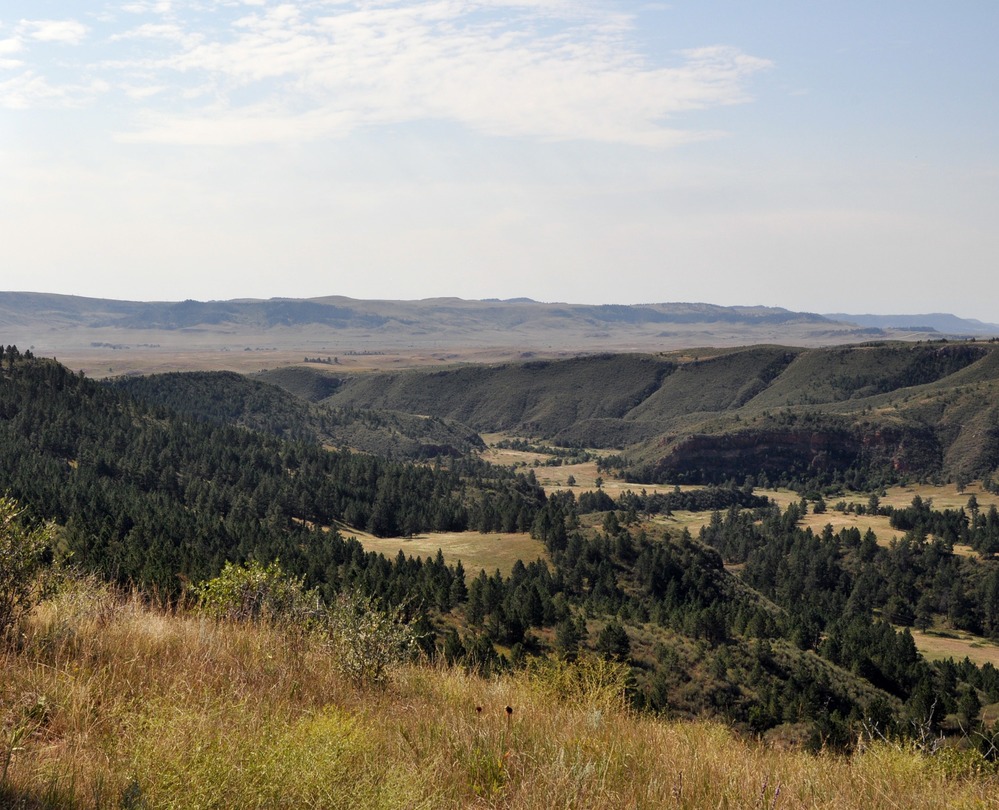
Fall in love with the West at Custer. This park preserves mountain lakes, towering granite spires, and rolling prairie in the Black Hills. Custer State Park is most famous for its 18 mile Wildlife Loop Road, where you are almost guaranteed to see deer, elk, pronghorn, and the iconic bison. The Needles Highway winds though granite spires at elevations so much higher than the surrounding prairie, you'll feel on top of the world. To the native Sioux inhabitants, it was the top of their world.

Bison roaming the prairie

The Needles

#1 Larrabee State Park, Washington

My top state park is where the majestic forests of the Pacific Northwest meet the sea. Peaceful lakes drain through bubbling streams in a quiet forest, reaching the Salish Sea at rocky beaches. At low tide, sea urchins, anemones, and starfish briefly become part of our world while they wait for the incoming tide to return their world. If you find the right trail, you can sit cliffside and watch seagulls fly beneath your feet.

Forested headland

A small stream trickles toward the Salish Sea

This list is subjective and based on no criteria at all. If you chose to visit these or any other parks, check conditions first and carry the 10 essentials. Be aware of all hazards including wildlife and weather. Remember to leave no trace. 

Photo credits my own


Thursday, April 4, 2019

Summer Vacation Guide

Spring just started, but it's not too early to start thinking about summer vacation. National parks have figured into vacation plans ever since the invention of national parks. They are great places to see amazing scenery- and crowds, or have a chance encounter with wildlife- and crowds. Here are a few lesser-known parks with fewer visitors. Just be careful getting there- some are very remote with little or no road access, which always makes for a better adventure.
By taking these roads less travelled, you'll get to experience more than the stereotypical majestic mountains and sweeping desert vistas. Our national parks have so much to offer!
Kobuk Valley National Park, Alaska
Great Kobuk Sand Dunes
Surrounded by mountains, this park is home to a vast caribou herd and extensive sand dunes. Yes, sand dunes North of the Arctic Circle! The sand is the result of glaciers grinding the mountains down. Also found in the park is the boreal treeline, where forest yields to tundra. Be prepared to fly in; there are no roads leading to Kobuk Valley and no services, either.
Tundra fire
National Park of American Samoa, American Samoa
Tutuila Rainforest
This is America's only national park south of the Equator. Full of white sandy beaches and coral reefs, it's a rare ecosystem in the park service holdings. The mountains and rainforests host fruit bats and several species of virds, including a beautiful blue kingfisher. Aside from natural splendor, you can also learn about traditional Samoan culture. Travelling there can be expensive, as American Samoa can only be reached by a long flight or a long ship voyage.
Pola Islands
Voyageurs National Park, Minnesota
North Woods winter
This northern Minnesota park is a kayaker's dream. About 40% of the park is water. This system of interconnected lakes, streams, and wetlands was named after the voyageurs, or four traders, who used this area to transport their wares from the interior to civilization on the Great Lakes. Today, the park preserves water quality, ancient rock formations, boreal and hardwood forests, and endangered species like wolves. While not as remote as Alaska and American Samoa, it's a long drive from the Twin Cities and getting around without a boat of some sort is limited.
Loons on a lake
Great Sand Dunes National Park, Colorado
Sand dunes with Sangre de Cristo Mountains
Off the beaten path in the Rockies, but not too far off, this park features alpine tundra, subalpine meadows, wetlands, forests, mountain streams, lakes, and of course sand. Such a diverse landscape attracts an equally diverse array of flora and fauna. Thousand year old trees share the park with prairie grasses, wildflowers, and scrub sage. Animal life ranges from dung beetles to horned toads to pronghorn, elk, and bear. There is only one road in, but it's an easy drive from Pueblo.
Elk with snowy sand
Wind Cave National Park, South Dakota
Cave boxwork
If you're looking for a good time above or below ground, Wind Cave is the place for you. Upstairs is a convergence of short and tall grass prairies and forest, right on the edge of the Black Hills. Downstairs is one of the world's longest cave systems. Sacred as the birthplace of the Sioux Indians in their origin stories, the cave gets its name from the wind blowing in or out of the small natural opening. Wind direction changes based on barometric pressure and is a good indicator of weather. While rare formations like boxwork can be found in the cave, rare animals like bison and black-footed ferrets are found above. This park is also easy to reach, about an hour south of Rapid City.
Prairie and forest
This week's information and all pictures comes from the National Park Service. Great Sand Dunes pictures come from their Flickr page.


Thursday, February 14, 2019

Animal Attraction


People are more like animals than we like to admit sometimes. Rather, we tend to believe that animals can be so human sometimes. One area where the lines between humans and animals can become blurred is that of courtship rituals and relationships. This Valentine’s Day let’s look at “love” in the animal world. Hopefully our finned, feathered, and furred friends don’t feel as awkward as we do.
Many times, in the animal world it is the female who chooses a mate. Males might compete with each other not by fighting, but other means. Bowerbirds build little houses with decorated yards to impress females. Prairie chickens and sage grouse gather in a lek, where the males display for the females. South American birds called manakins show like an 80s break dance fight from a movie. It reminds me of teenage boys trying to upstage each other to get a girl’s attention.
In other species, brute strength carries the day for males eager to win mating rights. Large mammals like elk and bison have a dominant male who controls a harem of females, unless a younger and stronger challenger is able to put him out to pasture. This behavior reminds me of countless schoolyard and lunchroom fights over a girl.
Once these critters become an item, how long does their relationship last? It depends on the critter, just like with us. Some species are monogamous pairs, some are promiscuous males, and some are promiscuous females. For those that have a hard time getting around, like corals and clams, it’s free love. Look around at our own society and you’ll see the same scenarios, though not always for the same reasons.
In promiscuous relationships it is the female who raises the young with no paternal help in most cases. The bison and elk, where a male controls a harem, are male promiscuous. He will mate with as many of the females as he can. His goal is to have as many offspring as possible, while the female’s goal is ensure that her offspring have the best chance of survival. Surely the strongest and most fit of the males has the genes that offer better odds.
Sometimes it is the female who gets around. Several species of primates and birds practice this. The female hopes for better reproductive success by keeping her options open. It may also have the advantage that comes with several males all believing the offspring are theirs. Since the male’s goal is to have as many offspring as possible, the uncertainty will make sure they are looking out for any that are potentially theirs.
Everyone’s favorite relationship is monogamy. A pair mates for life and we think it’s so sweet. It’s almost like they’re married. This behavior is seen in bald eagles and gray wolves, for example. In this situation, both parents care for the young. In most cases, the pair nest together year-round. Not so for the Laysan albatross like Wisdom, who we met a few weeks ago. While she has a monogamous partner, they spend most of the year apart, coming together only for the breeding season. Once they chicks fledge the nest, they all go their separate ways. Wisdom and her mate will see each other again next year.
The messiest mating strategy is dispersal. Wind pollenating plants (think of pine trees) use this method, as do many sea creatures. Some environmental cue triggers corals, clams, and other sessile critters to release sperm and egg cells simultaneously. The sea becomes a soupy mess as the currents mix everything together. The pinnacle of group sex, critters who have never met or even seen each other become proud parents of children drifting off to parts unknown.
Every species is adapted to whatever mating and parenting style works best to ensure the next generation will survive. A general rule of thumb: fewer offspring get more intense parenting, while more offspring get little to no parental care. Either way, parents are playing the percentages to make sure they win the mating game.
 This week's information comes from Nature Education and the Washington Post.


Friday, July 6, 2018

Species of the Month

This month’s species of the month celebrates independence with America’s newest national symbol, the bison, which became the national mammal in 2016. For the Plains Indians, the bison meant life. To me, it represents strength, power, and resilience as it was hunted nearly to extinction but has since recovered to an estimated population of 31,000 wild bison. While it’s a far cry from the tens of millions roaming the prairies and woods in the 19th century, it is much better than the thousand or so that remained in 1889. 
Bull bison at Yellowstone


Scientific name: Bison bison
Kingdom: Animalia (animals)
Class:   Mammalia (mammals)
Order: Cetartiodactyla (even-toed ungulates)
Grazing bison
Range: Historic range runs from Alaska and northern Canada west of Hudson Bay south to northern Mexico, Intermountain West east to the Appalachians. Current range is limited to national parks and preserves, private wildlife conservation areas, and private ranches scattered about the US, Canada, and Mexico.
Habitat: Forest and/or prairie habitat; can be found in tallgrass, shortgrass, or mixed grass prairies
Lifespan: 15-20 years
Diet: grasses, sagebrush
Bison herd at Custer State Park in South Dakota.
The orange colored calf is known as a "red dog".
Predators: wolves, mountain lions, humans
Conservation Status: Listed as near-threatened due to reliance on conservation for survival by IUCN. Listed as endangered under ESA.
Other Information: Bison were long a source of sustenance for the Plains Indians, who used every part of the body for food, clothing, shelter, and tools. They were hunted nearly to extinction in an effort to subdue the tribes that depended on them. Of the roughly 31,000 wild bison, only a small percentage are purebred. The rest are hybridized with domestic cattle. Wild bison herds are scattered throughout the West. Notable herds are found in Yellowstone, Wind Cave, and Wood Buffalo National Parks. There are two subspecies of bison: the familiar plains bison and wood bison, which lives in northern forests of Alaska and Canada. Bison grazing influenced plant communities, which in turn affected what other animals lived in the ecosystem. Bison form segregated herds based on age and sex. Male herds are smaller than female herds, although more males will join as the rut approaches. The rut happens in late summer/early fall. A dominant bull controls a female harem, and younger bulls will challenge him. A bison’s shoulder hump is a mass of muscle that helps support the large head. The giant head works as a snow plow in the winter, clearing snow off the grasses. Despite their docile appearance, bison are capable of inflicting serious damage. They are fast- they can run up to over 30 miles per hour and have no problem using their horns. Keep your distance.
Resting captive bison in Washington


Lamar Valley bison at Yellowstone

Lamar Valley bison at Yellowstone


This week's information comes from University of Michigan's Animal Diversity Web, The Nature Conservancy, US Fish and Wildlife Service, and Environment News Service. 

Thursday, April 12, 2018

Bison and Buffalo


The species comparison series has returned. This week we’ll look at the difference between buffalo and bison, an animal frequently called a buffalo. Both of these beasts are members of the bovine (cow) family.
Bison live in North America and eastern Europe. Buffalo live in Africa and Asia. The bison have larger heads than buffalo, and also sport a large hump over the shoulders, something the buffalo lack. The buffalo has larger horns than the bison, and overall weighs more. Placing the two side by side, the buffalo (both African cape buffalo and Asian water buffalo species) looks more like a domesticated cow than either American or European bison.
Bison or buffalo?
To tell the difference between the buffalo species, look at the horns. Water buffalo horns grow out and up. Cape buffalo horns grow down before arcing out and up, and look like a handlebar mustache on the animal’s head.
Water buffalo, native to Asia (Wikipedia)
Cape buffalo, native to Africa (Wikipedia)

The differences between American and European bison are more subtle. There are differences in the face, but it's not something I know how to describe. The American bison has a more pronounced hump than its European counterpart. The European bison is taller, while the American is hairier.
American bison

European bison (Free Nature Images)
Check back next week as we continue this series, going back to amphibian species. This week's information comes from Live Science.

Thursday, February 8, 2018

Winter Adaptations

As I deal with a pair of winter storms over the course of writing this blog, I am sitting cozy and warm inside my house. How do animals, who don’t live in houses with central heating or furnaces make it through the winter? Some migrate to warmer areas, but those that stay behind have special adaptations that help them cope with the cold and snowy weather.

Many animals go into mega energy conservation mode during the winter because not only do they lack heating systems for their homes, they also lack supermarkets that carry a reliable food source. For herbivores, their plant-based food supply is either dormant (and not producing the nutritious shoots they crave), or buried under snow and ice. Whether warm-blooded or cold-blooded, both need to keep warm to survive. Cold-blooded critters rely on the sun’s radiant heat to stay warm, and this is a challenge when it’s cold outside and the sun isn’t reliable. Warm-blooded critters metabolize food to stay warm- they eat much more than cold-blooded ones. One option to keep up metabolism is to spend energy to search for scarce food. But there are other ways to get by.

Hibernation is probably the first coping mechanism you think of, and it’s quite common in the mammal world. Bears do it, bats do it. What is it, compared to normal sleep? When you go to sleep your body slows down. Breathing and heart rate go down and metabolism slows, and your body temperature cools a bit. Hibernation is an extreme version of this. But to be asleep for weeks or months on end requires quite a bit of sustaining energy, even if bodily functions slow to the point of nearly stopping. That’s why bears go on a feed frenzy each fall, gorging themselves on spawning salmon or high-energy moths if they live in the right place.
NPS graphic of a hibernating bear

For those that don’t hibernate, finding food is a priority. Arctic foxes and snowshoe hares both grow a white coat for snow camouflage. The fox uses its camo to hunt; the hare uses its to avoid being eaten. The bison uses its large head as a snowplow to uncover buried vegetation. Ever wonder what that large hump at its shoulder is? Extra muscles to support all that head.
Snowshoe hare (Montana Fish, Wildlife, and Parks)

Bison plowing for food (NPS)

Preserving body heat is a great way to maximize caloric efficiency. The thick fur coat of a muskox traps body heat. Blubber insulates whales, seals, and walruses. Polar bears have black skin that absorbs heat, and their fur traps heat, including body heat that they radiate.
Walruses (US Fish and Wildlife Service)
Ease of mobility is also an efficiency adaptation. Lynxes and caribou both have large feet that act as snowshoes, making it easier to get around so they burn fewer calories doing so.
Check out the foot on that lynx! (Natural Resources Research Institute)

These are just a few of the many adaptations that make survival possible for warm-blooded mammals. There are others, and there are also adaptations for cold-blooded animals (like a frog with antifreeze in its blood) and plants too! Enjoy your heater for the rest of the winter!