Translate

Showing posts with label blackberries. Show all posts

Thursday, July 20, 2017

The Devil's Weed

Richard Nixon had an enemies list, and so do I. Unlike Tricky Dick, my enemies are not political foes but plants. Specifically, the invasive Scotch broom and Himalayan blackberry. Both take advantage of disturbances and are persistent. My worst nightmare came true when I found a Scotch broom growing intertwined with a blackberry. I just know they were plotting against me!
Let’s start with Scotch broom. Native to Europe, this shrub with the ugly yellow flower came to America to fight soil erosion and brighten up roadsides. Once it took root, it took over. I’ve seen fields of it. Even a forest of old growth Scotch broom, trees 15 feet tall crowding out the native vegetation. It takes over grasslands and forest, causing habitat loss for the many critters who call grasslands and forests home. If eaten, it can be toxic.
Old growth Scotch broom- not too impressive but it's winter in this picture
Great, it puts nitrogen in the soil (it’s actually a member of the pea family), but what good is nitrogenated soil if no one else gets to use it? Seeds can remain viable in the soil for 80 years, maybe longer. Fire doesn’t destroy them; in fact, they may even benefit from fire since this weed loves a disturbed area. Constant pulling is the best way to control this fiend. Just don’t pull a muscle in your back like I did.
Scotch broom monoculture (from Bingham County, ID)
Himalayan blackberries may be even worse than Scotch broom. Blackberries can fight back. The canes are covered in thorns that make cutting them a chore that involves getting yourself cut in the process. The canes grow up, droop down, and sprout a whole new bush when they reach the ground. Each bush gives off thousands of berries, each with dozens of seeds. Birds, bears, raccoons, and who knows what else eat the berries and poop put the seeds, spreading more evil bushes far and wide.
The Himalayan blackberry is a failed experiment by food biologist Luther Burbank. Using selective breeding, he created varieties of fruits and vegetables that we still eat today. The Himalayan blackberry (which originated in Armenia) was supposed to be a thornless variety. Instead, it turned out to be perfectly adapted to life in the Northwest. It can grow just about anywhere and will cover anything in its path. The one pictured below (next to a tree) is at least 15 feet tall. I added a second picture with the entire tree visible, for perspective.
Himalayan blackberry under this Douglas fir

Left Douglas fir is the one seen above


When you are working on restoring a site to its natural condition, there will more than likely be at least one invasive plant. But it gets so frustrating when you have to clear the same plants year after year, especially when you know you got rid of them all the year before. Diligence and persistence are probably the two most important tools in any restoration ecologist’s kit.
Himalayan blackberry is just now beginning to bear fruit

Scotch broom greets me at my land trust property

Here's the variety with red on the flowers
Luther Burbank info came from this fascinating NPR article. The monoculture picture is from Bingham County, Idaho's noxious weed program.


Saturday, May 20, 2017

Vanishing Prairies, Part 1

When you think of the Pacific Northwest you probably think of misty forest full of towering trees and glacier-covered volcanic peaks. You think of killer whales and salmon in Puget Sound and coffee-fueled hipsters of Seattle and Portland. Do prairies ever cross your mind?

The Puget Sound region is home to remnant prairies, an ecosystem that currently only covers 10% of the area it covered before the arrival of European settlers. Why did the prairies disappear? Settlers replaced prairie grasses and flowers with pasture grass, crops, and orchards. Cities sprang up in other areas. Forests took over some prairies after the settlers didn’t keep up the Indians’ practice of setting fires to keep the prairies open. Invasive species overran others.

I was privileged to visit Glacial Heritage Natural Area, a mounded prairie, earlier this year to pull invasive Scotch broom. Mounded prairies are covered in small hills of indeterminate origin. Weather was the biggest challenge that day. Part of the time it was sunny and warm, but there were periods of sideways rain and even sleet. I got into such a frenzy pulling my archenemy that when I happened to find some broom that was already pulled, I was disappointed.


Flash forward to May, and the place was almost unrecognizable. The weather deteriorated to constant downpours, but the biggest change was in the flora. During my first visit, the only plants I could identify were Scotch broom, Himalayan blackberry, and a shooting star that had already bloomed. This time, the place was awash in color. There was more blue camas than I’ve ever seen, as well as endangered golden paintbrush and a bunch of other flowers I’m not familiar with. Next week we’ll discuss some of the critters that call our prairies home, as well as look into the mysterious geology of the mounded prairie. Until then, enjoy some pictures of the flowers!
Notice the mounds?


Red columbine

Endangered golden paintbrush and blue camas

Blue camas

A white "blue" camas


Red sorrel

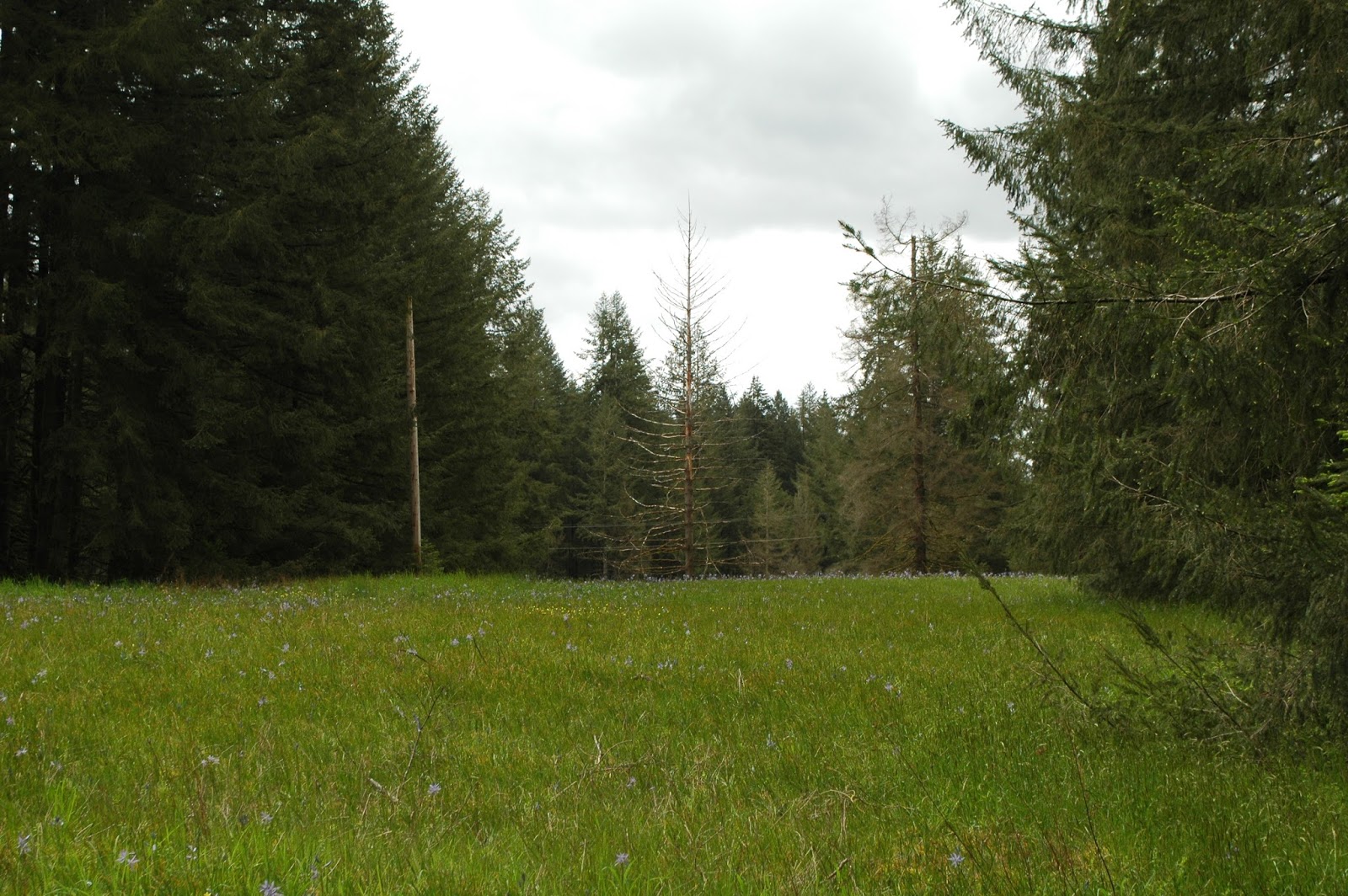
Stand of Douglas fir in the middle of prairie

The forest edge


Harsh paintbrush


Wednesday, March 1, 2017

Invasion USA

Almost halfway through the week, I was informed that this is National Invasive Species Awareness week. To celebrate, I pulled yellow archangel, a spreading ground cover on Saturday morning. Invasive species are exactly what they sound like- species that invade an area they are not native to. They can damage an ecosystem and also cause economic harm.
Yellow archangel, named for its yellow flower (not shown- it's January)

Several crop pests, like the stinkbug, cause millions of dollars of damage to produce annually. It hails from Asia and was first spotted in the US in Allentown, PA, near my home at the time. I was living in stinkbug Ground Zero, which explains why I had a house full of these strange bugs I’d never seen before.
Stinkbug (courtesy Rutgers University)

Since this is Nature Minute and not The Economist, we’ll focus on ecosystem damage caused by invasives. Invasive species can be anything. In my outdoor rambles I’ve come across invasive birds, amphibians, and plants. Each can negatively impact an ecosystem in its own way. Though they don’t belong, they are able to thrive in absence of a biological control.
The American bullfrog is an introduced species in the Pacific Northwest. We will probably never get rid of them here. They have a voracious appetite and will just about anything that fits in its mouth. That includes the tadpoles of native amphibians. Lucky for us, great blue herons enjoy a nice fat frog.
American bullfrog

Scotch broom, my mortal enemy, is one of many invasive plants I work to eradicate from my conservation property. It is the devil’s weed, coming in the form of a shrub (or tree if it goes to old growth) which crowds out other plants that native animals eat. The animals could browse on Scotch broom if they wanted to, but it contains toxins. On the plus side, as a legume, it fixes nitrogen in the soil. However, most plants here are adapted to lower nitrogen soil and can suffer from an excess of it. The most effective (and time-consuming) way to eliminate Scotch broom is by hand. But take don’t rejoice over that cleared area too much; seeds remain viable for decades so removal requires vigilance.
Forest of old growth Scotch broom


Other problematic invasive species include Asian carp in the Mississippi River, nutria (a rodent of unusual size) in Louisiana and the Northwest, Himalayan blackberries everywhere, feral pigs and kudzu (a Japanese vine) in the South, zebra mussels in freshwater nationwide, and pythons in the Everglades.
Rodent of unusual size- nutria (courtesy of The Last Word on Nothing)

Kudzu swallowing a house (courtesy of Smithsonian Museum of Natural History)

Check with your state Agriculture Department to see what invasive species are near you. Remove what you can and check guidelines for preventing their spread.
Rutgers University: https://njaes.rutgers.edu/stinkbug/identify.asp
The Last Word on Nothing: http://www.lastwordonnothing.com/2014/08/11/snark-week-evil-has-a-new-name-and-buck-teeth/
Smithsonian Natural History: http://nmnh.typepad.com/the_plant_press/2014/05/china-expedition-2013-a-tale-of-typhoon-tossed-kudzu-by-ashley-n-egan.html