Translate

Showing posts with label coyotes. Show all posts

Thursday, September 17, 2020

Species of the Month

The elk rut is upon us, so to that end the Species of the Month for September is the elk. In North America there are four surviving subspecies and two that are extinct. In Eurasia, where it is known as red deer, there are eight subspecies. 
Female elk herd

Scientific name: Cervus elaphus
Kingdom: Animalia (animals) 
Class: Mammalia (mammals) 
Order: Artiodactyla (even-toed ungulates)
Bull elk

Range: Western North America, northern Europe, northern Asia, isolated reintroduced populations in eastern US, introduced populations in Ireland, Argentina, Australia, New Zealand, and Chile
Habitat: Open woodlands
Lifespan: Average 20 years, but difficult to gauge due to hunting
Diet: Grasses, sedges, forbs; woody growth in winter
Predators: Gray wolves, coyotes, mountain lions, bears
Conservation Status: No special protection 
Elk calf nursing

Other Information: The elk is known for the haunting bugle call of the male during the rut. Bugling is used for attracting a mate and advertising territory. Like other horned or antlered mammals, male elk will spar to establish dominance. Dominant males form a harem of females. On occasion, a lesser male will sneak in to mate with one or more of the harem. Elk are social and form segregated herds. Females and calves are dominated by a single alpha female. Males form a bachelor herd. The sexes mingle during the late summer/early fall migration and mating season. Following the birth of calves, mothers and their babies form a separate nursery herd away from the rest of their normal herd. Aside from being larger than deer, elk can also be distinguished by a larger head, dark mane, and large white rump patch. Like deer, elk are most active in early morning and late evening. Coming around a bend on the way to work and seeing the big white butt in the road is a great way to start the day, if given enough stopping distance. Elk browse on grasses and forbs in spring, summer, and fall. Their winter diet may include green woody growth. As ungulates, they have a multi-chambered stomach and chew their cud. Only male elk grow antlers, which they shed annually. Eastern populations of elk were extirpated in the 19th century. Several successful reintroductions of Rocky Mountain elk have since occurred, notably in Elk County, Pennsylvania, and Kentucky.
Bull elk showing off his rump patch

This week's information comes from University of Michigan's Animal Diversity Web. Stay tuned for a recap of the 2020 firefly season next week.

Friday, July 17, 2020

Species of the Month

Introduction: Summer is road trip season, and many people do a road trip through any of
the western national parks. Most folks have a goal of seeing some wildlife, and one of the
iconic animals of the west is the bighorn sheep. They can be seen picking their way along
sheer cliffs in an amazing feat of agility, but I think more people are impressed by rams
crashing into each other head first as they battle for mating rights.
Scientific name: Ovis canadensis
Kingdom: Animalia (animals)
Bighorn ewe enjoying the view

Class: Mammalia (mammals)
Order: Artiodactyla (even-toed ungulates)
Range: Southern Canada south to Mexico, as far east as Texas
Habitat: Mountain meadows, rocky cliffs, deserts
Bighorn rams
Lifespan: 6-15 years, depending on population status
Diet: Grasses, sedges, forbs
Predators: Mountain lions, wolves, coyotes, bears, lynx
Conservation Status: California bighorn sheep subspecies is listed as endangered.
Bighorn lamb taking a break from frolicking
Other Information: There are three subspecies of bighorn sheep: Rocky Mountain, the most numerous
and widespread; California, which is endangered and can be found in the Sierras; and desert bighorn,
which live in the deserts of the US Southwest and Mexico.
Bighorns use rocky slopes and cliffs to avoid and evade predators. Specially built toes allow them to
navigate along ledges that are only inches wide, and excellent depth perception allows them to
accurately leap from one to another.
Bighorns have a shorter lifespan in dynamic populations with a high birth rate, on average 6 or 7 years.
Those in a more stable population with a lower birth rate tend to live longer, to longer than 10 years.
Ewes lounging at the top of a slope
Bighorns live in segregated herds, males in a smaller herd, while females and lambs (male and female)
form larger herds. The herds mingle during the rut, which takes place in fall and early winter. Lambing
occurs in spring, and newborns are able to keep pace with mom almost immediately.
Sparring for mating rights involves males ramming head first into each other at speeds of up to 20
miles per hour. Horns can weigh up to 30 pounds. The force generated is enough to kill a human. Ram
skulls are made of several plates, like human skulls, but the rams' do not fuse into a single solid piece
of bone. That design lets the plates shift to absorb the shock of the repeated blows. The curl of the
horns might also deflect some of the shock away from the head, while a large tendon connecting the
head and neck helps the head recoil.
Rams battling for a mate (Smithsonian)
This week's information comes from University of Michigan's Animal Diversity Web and
Indiana Public Media. Next week wraps up the energy series with a look at the elephant in the room,
nuclear.

Thursday, May 21, 2020

Species of the Month

Introduction: This month we take a look at the badger, a tough little critter that's rarely seen.
Living underground and working mostly at night keeps the American badger off the radar for
most of us. More than just Wisconsin's mascot, they can be found all over the west.
American badger (NPS)
Scientific name: Taxidea taxus
Kingdom: Animalia (animals)
Class: Mammalia (mammals)
Order: Carnivora (carnivores)
Notice the large claws on the forefoot (Fort Hayes State University)
Range: Great Lakes region and Central Canada south to Mexico and west to the Pacific
Habitat: Grasslands- fields, meadows, prairies, or pastures
Lifespan: 4-10 years, oldest in the wild was 14
Diet: Fosorial rodents- gophers, moles, ground squirrels, prairie dogs, mice, rats, voles;
snakes; insects; ground nesting birds
Predators: Humans, golden eagles, bobcats, mountain lions, coyotes, bears, wolves
Conservation Status: No special status, but protected from hunting in British Columbia,
Illinois, Michigan, and Wisconsin.
Other Information: The American badger is a member of the weasel family. A flat body,
stubby legs, and long claws for digging make them an ideal underground predator. They
are one of the few predators that will chase their prey underground, either through
existing tunnels or by making their own as they go. Badgers use several burrows in their
territory, so the unused ones often have other animals living in them.
Mother badger with baby (USFWS)

The American badger mates in late summer or early fall, but embryos don't implant in the
uterus until winter. During winter, badgers are typically inactive in a state of torpor, so the
delayed implantation is likely an adaptation to prevent the females from burning through
fat stores while pregnant. Although coyotes are known to prey on badgers, sometimes they
will hunt cooperatively. Coyotes are more successful catching rodents on the surface, and
badgers are more successful catching them in burrows. Working together, they make more
prey available to each other.
Coyote and badger taking a break (USFWS)


This month's information comes from the Animal Diversity Web at University of Michigan.

Thursday, October 17, 2019

Species of the Month

With Halloween right around the corner, October's Species of the Month is another creepy crawly. You might be afraid of spiders or bats, but no one wants to see a rat in the house. This month we profile the ubiquitous black rat (AKA house rat, AKA roof rat, AKA ship rat), destroyer of crops, chewer of things, and spreader of plague. 
Halloween rats from Pintrest

Scientific name: Rattus rattus
Kingdom: Animalia (animals)
Class:  Mammalia (mammals)
Order: Rodentia (rodents) 
Range: Worldwide; native to India and Southeast Asia
Habitat: Almost anywhere
Lifespan: Average 1 year, up to 4 years
Black rat (Inventaire National du Patrimoine Naturel)

Diet: Omnivorous, but mainly plant-based (fruits, grains, seeds)
Predators: House cats, birds of prey, foxes, coyotes
Conservation Status: No special protection
Other facts: The black rat was spread around the world by travelers. They are also called ship rats because if their affinity for sailing to new homes on distant shores. The moniker roof rat comes from their climbing skills. They are an invasive pest everywhere outside of their native range, ruining food stores by soiling what they don't consume. They were a disease vector during the plague outbreaks of Medieval Europe, carrying fleas that hosted the virus. While plague is not as serious a threat as it was in the Dark Ages, the fleas on a rat can still spread other diseases to humans and livestock. A similar species, the Norway rat, is just as widespread and will kill the smaller black rat. Despite the headaches caused by both rats, they are important links in the food chain now that they've become established. Hawks, owls, coyotes, and foxes are among their main predators.
Black rat (Australian Environmental Pest Managers Association)

This month's information comes from the University of Michigan's Animal Diversity Web once again.

nm1: 
nm2: https://www.aepma.com.au/PestDetail/96/Black%20Rat


Thursday, August 1, 2019

Sound of the Wild

Think about the sounds you typically hear over the course of a  normal day. It starts with the alarm clock and quickly fills with noise. The toaster, the hairdryer, the microwave, cars, cars, and more cars, people talking and shouting, buses, trucks, trains, planes, and of course your phone. If you're lucky you heard some birds singing on the way out the door. Other than the lawnmower, popcorn, and a log on the fire, my favorite sounds come from a land far from modern conveniences.
Next time you are out and about pay attention to what you hear. Insects buzzing, birds singing and calling, the wind in the trees (or your ears). In the mountains you might hear pikas and marmots barking, or larger animals like coyotes or wolves howling in the distance. In the fall, you might be treated to the eerie sound of bugling elk.
A not-so-distant coyote, not howling
Water is life, and it also provides a great soundtrack. I can listen to crashing ocean waves or a gurgling river all day long. Rain falling on surfaces other than pavement is a wonderful experience. The pattering on a tree canopy is soothing enough to forget about being soaked, and rain falling in a pond is a magical sound. In a naturally quiet environment like a cave, there's a good chance you'll hear only a single drop of water at a time, maybe a few seconds apart, maybe a few minutes. Even better than rain is the sound of thunder in the distance. This can be a bit worrisome if you're a long way from shelter.
The soothing sounds of the Firehole River
Late summer nights, if there is no thunder, fall asleep to the sound of the crickets. In the spring, fall asleep to the sound of the tree frogs. Another special spring sound, which I've only heard once, is the knocking sound the trees make after the thaw when they start absorbing water and their sap is flowing again. It took a while to figure that one out.
Pacific tree frogs, a sure sign of spring
Here is a link to a short video of some sounds recorded at Yellowstone National Park. Note that the pictures don't necessarily correspond to the sounds. See how many sounds you can figure out!

Thursday, June 20, 2019

Species of the Month

As the snow disappears from higher elevations in the west, mountain hikes are once again becoming possible. That's where you'll meet our Species of the Month, although you are more likely to hear it than to see it. The American pika, though it looks rather mousy, is actually related to rabbits. Living high up in the rocky slopes of the Cascades, Sierras, and Rockies, it lets out a high pitched squeal as an alarm call when it spots a potential predator or passing hiker.
Pika adding to its cache of food (NPS)

Scientific name: Ochotona princeps
Kingdom: Animalia (animals)
Class: Mammalia (mammals)
Order: Lagomorpha (hares, pikas, rabbits) 
Range: Mountains of western North America from British Columbia south to New Mexico
Habitat: Talus fields within mountain meadows
Pika on the rocks (NPS)
Lifespan: Up to seven years, average is three years
Diet: Grasses and forbs
Predators: Weasels, coyotes, raptors, martens, foxes, bobcats
Conservation Status: No special protection, though seven subspecies are considered vulnerable
Other information: This little critter looks like a big, chunky mouse or a rabbit with short ears. They are active during the day, gathering plants during the summer for immediate consumption and also to stockpile for the long winter ahead. Pikas build haypiles of grasses and forbs, selecting plants with the highest protein content they can find. Haypiles are kept outside during the summer to dry, then moved to the den for winter. Pikas do not hibernate; they remain awake in a tiny cave within the rocks and under the snow, eating their way through that haypile. Like other lagomorphs, they frquently consume their scats. Food is not totally digested, so they eat the scat to absorb more nutrients. Eating it a second time more fully breaks down the plant material. Pikas communicate though alarm calls and scent marking. Scent glands are on the cheek. They rub their cheeks on rocks to mark their territory.
Pika (NPS)

Look for pikas at Mowich Lake in Mount Rainier National Park. This week's information once again comes from the good people at UM's Animal Diversity Web.

Thursday, May 3, 2018

This is a Crappy Subject


Now for the dirtier side of nature. Pretty much every living thing on this planet exists to be someone else’s meal. If you’re unlucky enough to become lunch, the next step is you become poop. No one likes to talk about it, look at it, or smell it. Even though it’s gross, it’s an essential element of the environment for a couple of reasons.
Raccoon scat
The most important function of poop, or scat as we call it in the science world, is a key role in the nutrient cycle. Every living thing needs an assortment of minerals in order to function properly. Minerals are absorbed from the soil by plants, then absorbed by herbivores that eat those plants, then absorbed by various levels of carnivores up through the food chain. Some minerals are present in the ground in rocks; others are returned to the soil through decaying organic matter (plant or animal) or through scat.
Nutrient cycle (from Exploring Nature.org)
Another important impact scat has on the environment is negative, and it goes beyond getting on your shoe. Nitrates and phosphates are common in scat, and also happen to be active ingredients in fertilizer. Excessive nitrates and phosphates in storm runoff causes high nutrient levels in lakes, streams, and even the ocean. Those high levels can cause an overgrowth of algae. Too much algae, even though it produces oxygen, can cause dead zones of little to no oxygen when the algae dies and decomposers feasting on it suck all the oxygen out of the water.
Algae bloom (Michigan Radio)
A third way scat is important is as a research tool. It allows people like myself who rarely observe animals in the wild to see what animals have been down the trail before. DNA samples can be pulled from scat, and population biologists can estimate population by counting turds. Ecologists can study an animal’s dietary habits from looking at scat.
The coyote that dropped this deuce ate a bird
Deer scat
Now that you’ve seen the usefulness of animal scats, maybe you will look at it in a whole new light on your next foray into the woods. Like anything else in nature (except maybe spiders), if you can overcome your aversion, you can learn to appreciate it.

Thursday, April 5, 2018

Species of the Month


Easter has come and gone, but the memory remains. Last year we took a look at the cottontail rabbit and this year the Easter species of the month is currently filling our ponds and creeks with quacks but will soon be joined by tiny peeping sounds. Enjoy a brief profile of the mallard duck.

Easter ducklings with mother

Scientific name: Anas platyrhynchos
Kingdom: Animalia (animals)
Class:   Aves (birds)
Order: Anseriformes (ducks, geese, and swans)
Range: North and South America, Eurasia, north Africa
Habitat: ponds, wetlands, streams  
Lifespan: 5-10 years, oldest known was 27 years
Diet: plants, insects, worms, small crustaceans, cereal crops
Predators:  foxes, coyotes, birds of prey, humans
Conservation Status: no special protection
A group of mallards enjoying a warm spring day together

Mallard hen on the go

Other Information: The mallard is the most common waterfowl species in the world. They have adapted to life with humans, but still display a fear (which you’ve noticed if you ever tried to pet one in the park). They are dabbling ducks. Dabbling is what they do to eat- flipping head down in the water, tail up in the air. The females do the quacking. Mallards also make a sound that I describe as muttering at you under their breaths. Females lay clutches of 9-13 eggs in a nest on the ground. After hatching, ducklings follow mama to the water, never to return to the nest. However, there is always an exception to the rule. Mallards nested in a tree at my parents’ house, to everyone’s astonishment. Both male (drake) and female (hen) have iridescent feathers on their wings, and the drake also has an iridescent green head.
Mallard drakes, complete with iridescent green heads

Bottoms up! Dabbling drake

This week's information comes from University of Michigan's Animal Diversity Web. Species comparisons will return next week. Stay tuned and be sure to like Nature Minute on Facebook.

Tuesday, November 21, 2017

Species of the Month

November’s Species of the Month is another animal that is related to Thanksgiving. Last year, we covered the turkey, which is the traditional centerpiece in many a holiday feast. But recall that Massasoit’s braves also arrived at Plymouth with five deer. There are several species of deer in the world, and even in the US there are more than one. But the species found in Massachusetts and much of the country is the white-tailed deer.
Scientific name: Odocoileus virginianus
Kingdom: Animalia (animals)
Class: Mammalia (mammals)
Order: Artiodactyla (even-toed ungulates)
Range: Southern Canada to Bolivia in South America
Habitat: Nearly universal in their range: forest, grassland, swamp, and urban areas. Wooded cover and open browse are ideal.
Lifespan: 2-3 years in the wild, on average with a maximum of 20 years.
Diet: Grasses, forbs, shrubs, succulents, twigs and shoots of trees
Predators: Wolves, coyotes, mountain lions, jaguars, bears, humans
Conservation Status: No special protection

Other Information: The white-tailed deer is one of America’s most popular game animals. Hunted nearly to extinction, due to better game management and habitat enhancement (often incidental to loss of habitat for other species) it is believed that there are more deer now than in pre-Columbian times. White-tailed deer are a nuisance in some areas, destroying crops and ornamental plants, striking vehicles, and overconsuming forest resources due to overpopulation. They are also disease vectors, hosting ticks that carry Lyme disease. White-tailed deer also played an important role historically in the US. Native Americans and European settlers alike used the deer as a source of food, clothing, and tools. White-tailed deer mate in the fall, usually in their second year. Births are usually single or double. Fawns can walk immediately and have no scent. Lack of scent, coupled with camouflage pattern that makes them resemble the forest floor, is an adaptation to protect against predators. When startled, the mother will bolt and leave the fawn(s) behind, triggering a predator’s chase instinct. Bucks grow antlers annually prior to mating season. They will spar with other males, using antlers as a weapon and to impress females. Antlers, which are made of bone, grow covered in velvet, which supplies blood to the growing bone tissue. After the velvet is shed, the antlers stop growing and eventually weaken and break off after mating season ends. Summer and winter coats differ in color, ranging from brown to grayish. The underside of the tail is white and is flicked as a warning signal to others, giving the white-tailed deer its name. White-tailed deer is an ungulate and as such, has a multi-chambered stomach like cows. Food is partially broken down, regurgitated, and digested more completely. This allows the deer to break down tough cellulose in plant material to more efficiently gain energy from it.
November’s Species of the Month is another animal that is related to Thanksgiving. Last year, we covered the turkey, which is the traditional centerpiece in many a holiday feast. But recall that Massasoit’s braves also arrived at Plymouth with five deer. There are several species of deer in the world, and even in the US there are more than one. But the species found in Massachusetts and much of the country is the white-tailed deer.
Scientific name: Odocoileus virginianus
Kingdom: Animalia (animals)
Class: Mammalia (mammals)
Order: Artiodactyla (even-toed ungulates)
Range: Southern Canada to Bolivia in South America
Habitat: Nearly universal in their range: forest, grassland, swamp, and urban areas. Wooded cover and open browse are ideal.
Lifespan: 2-3 years in the wild, on average with a maximum of 20 years.
Diet: Grasses, forbs, shrubs, succulents, twigs and shoots of trees
Predators: Wolves, coyotes, mountain lions, jaguars, bears, humans
Conservation Status: No special protection
Other Information: The white-tailed deer is one of America’s most popular game animals. Hunted nearly to extinction, due to better game management and habitat enhancement (often incidental to loss of habitat for other species) it is believed that there are more deer now than in pre-Columbian times. White-tailed deer are a nuisance in some areas, destroying crops and ornamental plants, striking vehicles, and overconsuming forest resources due to overpopulation. They are also disease vectors, hosting ticks that carry Lyme disease. White-tailed deer also played an important role historically in the US. Native Americans and European settlers alike used the deer as a source of food, clothing, and tools. White-tailed deer mate in the fall, usually in their second year. Births are usually single or double. Fawns can walk immediately and have no scent. Lack of scent, coupled with camouflage pattern that makes them resemble the forest floor, is an adaptation to protect against predators. When startled, the mother will bolt and leave the fawn(s) behind, triggering a predator’s chase instinct. Bucks grow antlers annually prior to mating season. They will spar with other males, using antlers as a weapon and to impress females. Antlers, which are made of bone, grow covered in velvet, which supplies blood to the growing bone tissue. After the velvet is shed, the antlers stop growing and eventually weaken and break off after mating season ends. Summer and winter coats differ in color, ranging from brown to grayish. The underside of the tail is white and is flicked as a warning signal to others, giving the white-tailed deer its name. White-tailed deer is an ungulate and as such, has a multi-chambered stomach like cows. Food is partially broken down, regurgitated, and digested more completely. This allows the deer to break down tough cellulose in plant material to more efficiently gain energy from it.November’s Species of the Month is another animal that is related to Thanksgiving. Last year, we covered the turkey, which is the traditional centerpiece in many a holiday feast. But recall that Massasoit’s braves also arrived at Plymouth with five deer. There are several species of deer in the world, and even in the US there are more than one. But the species found in Massachusetts and much of the country is the white-tailed deer.
Scientific name: Odocoileus virginianus
Kingdom: Animalia (animals)
Class: Mammalia (mammals)
Order: Artiodactyla (even-toed ungulates)
Range: Southern Canada to Bolivia in South America
Habitat: Nearly universal in their range: forest, grassland, swamp, and urban areas. Wooded cover and open browse are ideal.
Lifespan: 2-3 years in the wild, on average with a maximum of 20 years.
Diet: Grasses, forbs, shrubs, succulents, twigs and shoots of trees
Predators: Wolves, coyotes, mountain lions, jaguars, bears, humans
Conservation Status: No special protection
Other Information: The white-tailed deer is one of America’s most popular game animals. Hunted nearly to extinction, due to better game management and habitat enhancement (often incidental to loss of habitat for other species) it is believed that there are more deer now than in pre-Columbian times. White-tailed deer are a nuisance in some areas, destroying crops and ornamental plants, striking vehicles, and overconsuming forest resources due to overpopulation. They are also disease vectors, hosting ticks that carry Lyme disease. White-tailed deer also played an important role historically in the US. Native Americans and European settlers alike used the deer as a source of food, clothing, and tools. White-tailed deer mate in the fall, usually in their second year. Births are usually single or double. Fawns can walk immediately and have no scent. Lack of scent, coupled with camouflage pattern that makes them resemble the forest floor, is an adaptation to protect against predators. When startled, the mother will bolt and leave the fawn(s) behind, triggering a predator’s chase instinct. Bucks grow antlers annually prior to mating season. They will spar with other males, using antlers as a weapon and to impress females. Antlers, which are made of bone, grow covered in velvet, which supplies blood to the growing bone tissue. After the velvet is shed, the antlers stop growing and eventually weaken and break off after mating season ends. Summer and winter coats differ in color, ranging from brown to grayish. The underside of the tail is white and is flicked as a warning signal to others, giving the white-tailed deer its name. White-tailed deer is an ungulate and as such, has a multi-chambered stomach like cows. Food is partially broken down, regurgitated, and digested more completely. This allows the deer to break down tough cellulose in plant material to more efficiently gain energy from it.
November’s Species of the Month is another animal that is related to Thanksgiving. Last year, we covered the turkey, which is the traditional centerpiece in many a holiday feast. But recall that Massasoit’s braves also arrived at Plymouth with five deer. There are several species of deer in the world, and even in the US there are more than one. But the species found in Massachusetts and much of the country is the white-tailed deer.
Scientific name: Odocoileus virginianus
Kingdom: Animalia (animals)
Class: Mammalia (mammals)
Order: Artiodactyla (even-toed ungulates)
Range: Southern Canada to Bolivia in South America
Habitat: Nearly universal in their range: forest, grassland, swamp, and urban areas. Wooded cover and open browse are ideal.
Lifespan: 2-3 years in the wild, on average with a maximum of 20 years.
Diet: Grasses, forbs, shrubs, succulents, twigs and shoots of trees
Predators: Wolves, coyotes, mountain lions, jaguars, bears, humans
Conservation Status: No special protection

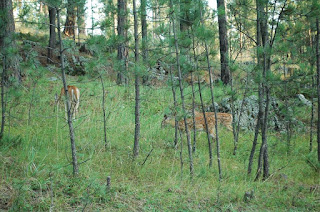
White-tailed doe resting in the cover of a forest

Other Information: The white-tailed deer is one of America’s most popular game animals. Hunted nearly to extinction, due to better game management and habitat enhancement (often incidental to loss of habitat for other species) it is believed that there are more deer now than in pre-Columbian times. White-tailed deer are a nuisance in some areas, destroying crops and ornamental plants, striking vehicles, and overconsuming forest resources due to overpopulation. They are also disease vectors, hosting ticks that carry Lyme disease. White-tailed deer also played an important role historically in the US. Native Americans and European settlers alike used the deer as a source of food, clothing, and tools. White-tailed deer mate in the fall, usually in their second year. Births are usually single or double. Fawns can walk immediately and have no scent. Lack of scent, coupled with camouflage pattern that makes them resemble the forest floor, is an adaptation to protect against predators. When startled, the mother will bolt and leave the fawn(s) behind, triggering a predator’s chase instinct. Bucks grow antlers annually prior to mating season. They will spar with other males, using antlers as a weapon and to impress females. Antlers, which are made of bone, grow covered in velvet, which supplies blood to the growing bone tissue. After the velvet is shed, the antlers stop growing and eventually weaken and break off after mating season ends. Summer and winter coats differ in color, ranging from brown to grayish. The underside of the tail is white and is flicked as a warning signal to others, giving the white-tailed deer its name. White-tailed deer is an ungulate and as such, has a multi-chambered stomach like cows. Food is partially broken down, regurgitated, and digested more completely. This allows the deer to break down tough cellulose in plant material to more efficiently gain energy from it.
Information this month comes once again from University of Michigan’s Animal Diversity Web. 
A mother and two fawns browse in edge habitat.
A buck is behind and uphill.

White-tailed buck (Pennsylvania Game Commission)

Friday, October 13, 2017

Road Trip Adventure- The Badlands

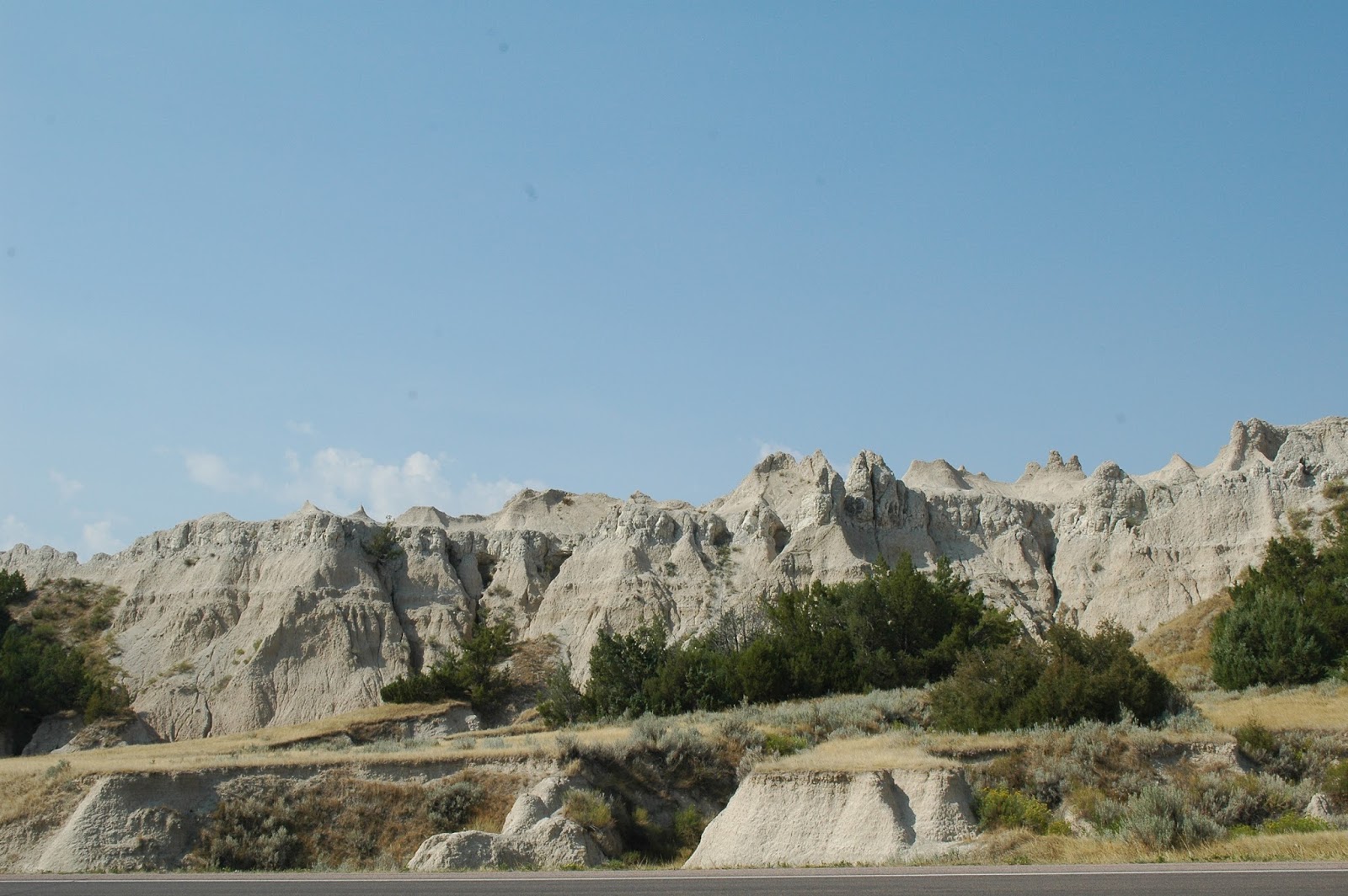
This week’s Nature Minute is the final story from the road. This week we take a look at Badlands National Park in South Dakota. The dazzling colorful rock formations here remind me of the Grand Canyon, though not as grand. I didn’t have time to explore, so I took in as much scenery as I could while cruising through. 
The mixed grass prairie doesn't betray what lies beneath
The first thing I saw when I entered the park was a prairie dog. Despite being known for the rock formations, there is a considerable amount of prairie here, complete with bison, prairie dogs, and reintroduced black-footed ferrets. Shortly after seeing the prairie dogs, I took the first turn (a right, if you’re keeping score) to see just how bad the lands are. There was a bighorn ewe keeping watch over the parking lot, my second critter of the morning. A quick scan of my surroundings revealed a few more sheep picking their way along just beneath the ridgeline.
Bighorn ewe
Like a gaping wound, an opening in the prairie
exposes the colorful bands of sedimentary rock
For being such a bad land, the Badlands hosts an astounding amount of wildlife. According to the National Park Service, 39 species of mammals, 9 reptiles, 6 amphibians, and 206 birds have been documented in the park. In addition to those listed earlier, there are coyotes, bobcats, foxes, two deer species, and pronghorn. Bird species include cliff swallows, horned larks, and northern harriers. Herps include rattlesnakes, snapping turtles, chorus frogs, spadefoot toads, and blotched tiger salamanders.
How did the Badlands form? Layers of sediments were deposited over a period of about 40 million years, beginning 67 to 75 million years ago. The oldest (and bottom) layer is muddy sea floor, complete with ocean fossils. Other layers were deposited by flooding rivers (when the area was a tropical forest), or most recently, ash from volcanic eruptions. These sediments all compressed into sedimentary rock and each layer is its own color. Erosion gives us the shape of the formations. Modern rivers scoured away at the layers of sediments, creating the peaks and canyons that we see today.
Badland formations

Badland formations

Here we can see where a river is
still carving out a canyon


Badland formations


Badland formations
That’s it for this year’s Nature Minute road trip. I hope to more travelling in the future and share more stories from the road. I encourage you to go seek your own adventures in the wild. This week’s information comes from the National Park Service (wildlife and geology).