Spring just started, but it's not too early to start thinking about summer vacation. National parks have figured into vacation plans ever since the invention of national parks. They are great places to see amazing scenery- and crowds, or have a chance encounter with wildlife- and crowds. Here are a few lesser-known parks with fewer visitors. Just be careful getting there- some are very remote with little or no road access, which always makes for a better adventure.
By taking these roads less travelled, you'll get to experience more than the stereotypical majestic mountains and sweeping desert vistas. Our national parks have so much to offer!
Kobuk Valley National Park, Alaska
 |
| Great Kobuk Sand Dunes |
Surrounded by mountains, this park is home to a vast caribou herd and extensive sand dunes. Yes, sand dunes North of the Arctic Circle! The sand is the result of glaciers grinding the mountains down. Also found in the park is the boreal treeline, where forest yields to tundra. Be prepared to fly in; there are no roads leading to Kobuk Valley and no services, either.
 |
| Tundra fire |
National Park of American Samoa, American Samoa
 |
| Tutuila Rainforest |
This is America's only national park south of the Equator. Full of white sandy beaches and coral reefs, it's a rare ecosystem in the park service holdings. The mountains and rainforests host fruit bats and several species of virds, including a beautiful blue kingfisher. Aside from natural splendor, you can also learn about traditional Samoan culture. Travelling there can be expensive, as American Samoa can only be reached by a long flight or a long ship voyage.
 |
| Pola Islands |
Voyageurs National Park, Minnesota
 |
| North Woods winter |
This northern Minnesota park is a kayaker's dream. About 40% of the park is water. This system of interconnected lakes, streams, and wetlands was named after the voyageurs, or four traders, who used this area to transport their wares from the interior to civilization on the Great Lakes. Today, the park preserves water quality, ancient rock formations, boreal and hardwood forests, and endangered species like wolves. While not as remote as Alaska and American Samoa, it's a long drive from the Twin Cities and getting around without a boat of some sort is limited.
 |
| Loons on a lake |
Great Sand Dunes National Park, Colorado
 |
| Sand dunes with Sangre de Cristo Mountains |
Off the beaten path in the Rockies, but not too far off, this park features alpine tundra, subalpine meadows, wetlands, forests, mountain streams, lakes, and of course sand. Such a diverse landscape attracts an equally diverse array of flora and fauna. Thousand year old trees share the park with prairie grasses, wildflowers, and scrub sage. Animal life ranges from dung beetles to horned toads to pronghorn, elk, and bear. There is only one road in, but it's an easy drive from Pueblo.
 |
| Elk with snowy sand |
Wind Cave National Park, South Dakota
 |
| Cave boxwork |
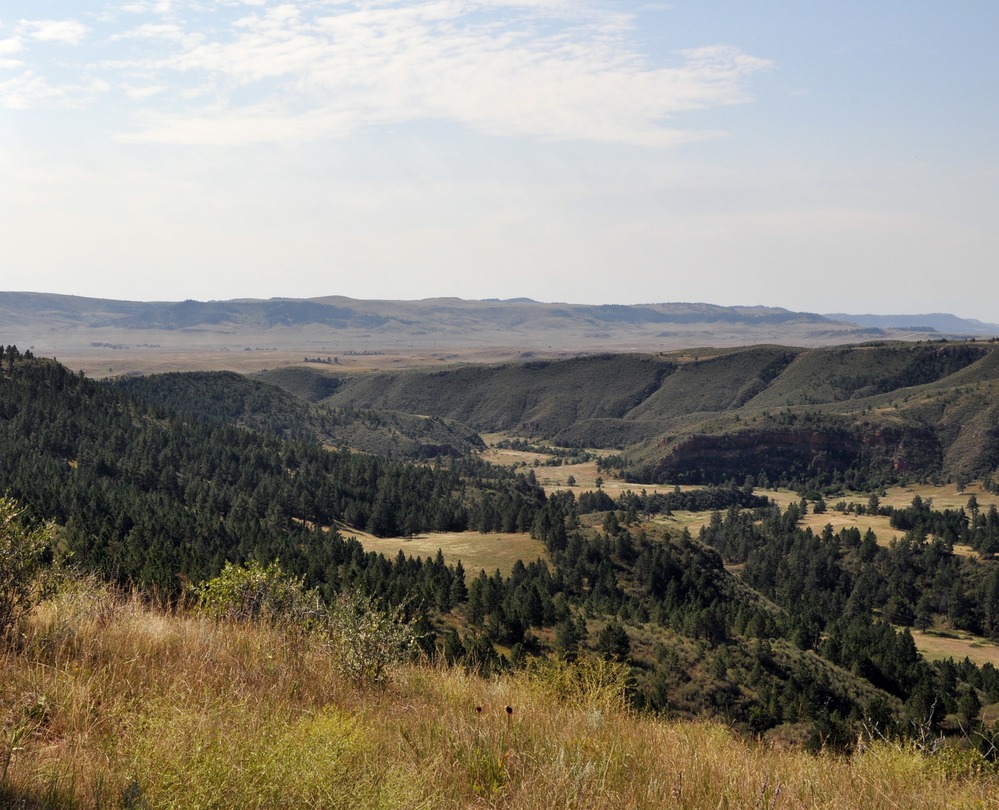
If you're looking for a good time above or below ground, Wind Cave is the place for you. Upstairs is a convergence of short and tall grass prairies and forest, right on the edge of the Black Hills. Downstairs is one of the world's longest cave systems. Sacred as the birthplace of the Sioux Indians in their origin stories, the cave gets its name from the wind blowing in or out of the small natural opening. Wind direction changes based on barometric pressure and is a good indicator of weather. While rare formations like boxwork can be found in the cave, rare animals like bison and black-footed ferrets are found above. This park is also easy to reach, about an hour south of Rapid City.
 |
| Prairie and forest |
This week's information and all pictures comes from the National Park Service. Great Sand Dunes pictures come from their
Flickr page.