Last week
we explored some of the different habitats in the Everglades. This week we’ll
look at some the plant and animal residents, then wrap up with some of the many
challenges facing the region.
So many
different kinds of animals live in the Everglades. They range from tiny biting
flies to giant mosquitoes that can carry you back to their dens and every size
of mosquito in between. There are also birds, reptiles, amphibians, mammals,
fishes, crustaceans, and arachnids. Many threatened and endangered species call
this place home. Some of the highlights: Florida panther, eastern indigo snake,
American crocodile, West Indian manatee, five species of sea turtle
(leatherback, loggerhead, green, hawksbill, and Atlantic ridley), snail kite,
wood stork, piping plover, and red cockaded woodpecker.
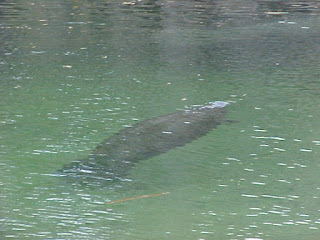 |
| West Indian manatee |
Other
critters you can find there include alligators, black bears, deer, marsh
rabbits (which is a capable swimmer, gray foxes (which can climb trees), pilot
whales, dolphins, several bat species, the gulf toadfish (which is audible to
humans), roseate spoonbills, flamingoes, owls, parakeets, shore birds,
waterfowl, owls, and birds of prey.
 |
| American crocodile (NPS) |
Plant life
in the Everglades includes sawgrass, named for its serrated edges; Simpson’s
applecactus, an endangered night-blooming species; wildflowers like climbing
aster, coralbean, devil’s potato, and duck potato; several species of orchids
that can be found in nearly all of the Everglades habitats, including treetop
canopies; and a wide variety of trees. Among the many trees are three mangrove
species, West Indies mahogany, live oak, slash pine, bald cypress, gumbo-limbo,
buttonwood, royal palm and sabal palm.
 |
| Coralbean (NPS) |
Like any
other natural area, there is damage caused by humans. Some is recent, but some
goes back decades. As development came to Florida, much of the water was
diverted by canals. Wetlands were filled in and built over. The diminished flow
and water fouled with agricultural runoff and sediment has had far-reaching
effects, even today. The current red tide on Florida’s Gulf Coast is likely a
result.
Invasive
species, especially the Burmese python and boa constrictor, are of increasing
concern. These snakes eat just about any native species in the Everglades,
including the alligators. With no natural predators, their populations are able
to grow unchecked. Although snake hunts are held throughout the year, they are
very well camouflaged and are able to escape detection. Another species of
concern is the melaleuca tree, which shades out native plants. At least a tree
is easier to find than a python. Lionfish are an exotic species that eats the
native populations. Increasing demand for them as a food fish is having limited
success in eradicating them.
In the
marine habitat, propeller scars form when boaters in shallow water mow
submerged vegetation or even scrape the sea floor. Scraping bottom is far worse
because it kills vegetation directly. It also kicks up sediment, which shades
nearby vegetation, indirectly killing more.
The amazing
biodiversity of the Everglades leaves quite a lasting impression on visitors.
Unfortunately the human impact leaves an even bigger mark on the landscape and
wild residential population. While government agencies from the local level up
to federal are spending a lot of money to restore the ecosystems,
paradoxically, those same governments are allowing more destruction in other
parts of the Everglades. It’s a tragic lesson in how our lifestyle choices have
consequences most of us never see or think about.
This week's information, like last week, comes from the
National Park Service.


